
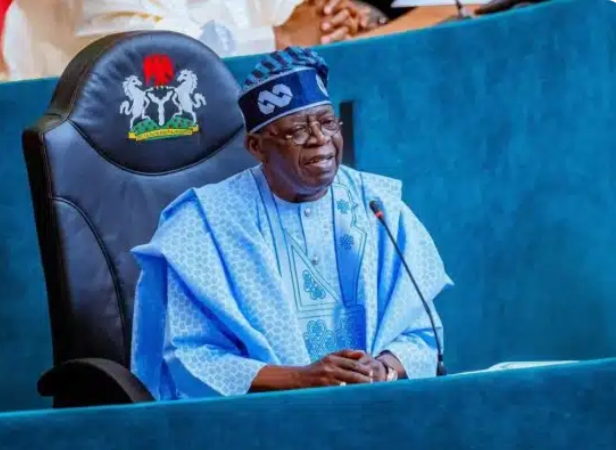

The Inter-Party Advisory Council (IPAC) has criticised President Bola Ahmed Tinubu over his recent comments defending the credibility and neutrality of the Independent National Electoral Commission (INEC), insisting that the President should not speak on behalf of the electoral body.
The National Chairman of IPAC, Yusuf Dantalle, said while President Tinubu has the constitutional right to express his personal views on national issues, his position as Nigeria’s leader requires him to exercise caution when making statements concerning institutions expected to operate independently.
The reaction follows remarks made by President Tinubu during a meeting with members of the Catholic Bishops’ Conference of Nigeria at the Presidential Villa in Abuja on July 29, where he described INEC as a neutral institution.
Speaking during a television interview, Dantalle argued that such comments could create the impression that the Presidency was defending the electoral commission, a role he maintained should be left to INEC itself.
According to him, the President occupies a unique position as the leader of the entire country and should be seen as impartial, representing not only members of the ruling party but also opposition parties and every Nigerian citizen. He stressed that statements capable of influencing public perception of the electoral process should be made carefully to preserve confidence in democratic institutions.
Dantalle maintained that INEC has its own leadership and official communication channels responsible for explaining the commission’s actions, policies and level of preparedness for elections. He said allowing the commission to speak for itself would strengthen public confidence in its independence and credibility.
The IPAC chairman also noted that the council’s concerns extend beyond the electoral commission itself. According to him, many of the challenges associated with Nigeria’s electoral process stem from existing legal and constitutional provisions guiding elections rather than the commission alone.
He disclosed that IPAC had recently held extensive engagements with INEC to discuss several electoral issues and had also submitted recommendations to the Joint Committee of the National Assembly handling amendments to the Constitution and the Electoral Act.
According to Dantalle, the council proposed several reforms aimed at strengthening the country’s electoral framework and improving transparency, accountability and public confidence in future elections. He argued that addressing the legal foundation of Nigeria’s electoral system is more important than focusing only on the operational activities of INEC.
He added that meaningful electoral reforms would reduce recurring disputes associated with elections and create a stronger democratic process capable of commanding the trust of political parties and the electorate.
Dantalle further stated that IPAC would continue engaging with INEC in the months ahead to evaluate the commission’s preparedness for the 2027 general elections. He explained that the council intends to assess the outcome of the planned mock accreditation exercise and other operational tests before making a comprehensive assessment of the commission’s readiness.
He said IPAC remains committed to working with relevant stakeholders to promote free, fair and credible elections while advocating reforms that would strengthen Nigeria’s democratic institutions.
The development comes as political parties, civil society organisations and election observers continue to intensify discussions on electoral reforms ahead of the 2027 general elections, with growing calls for stronger legal frameworks and greater public confidence in Nigeria’s electoral process.
