
Add All Kalabari Big Men Together, They Cannot Match Wike’s Contributions to Ikwerre’ – Dokubo-Asari

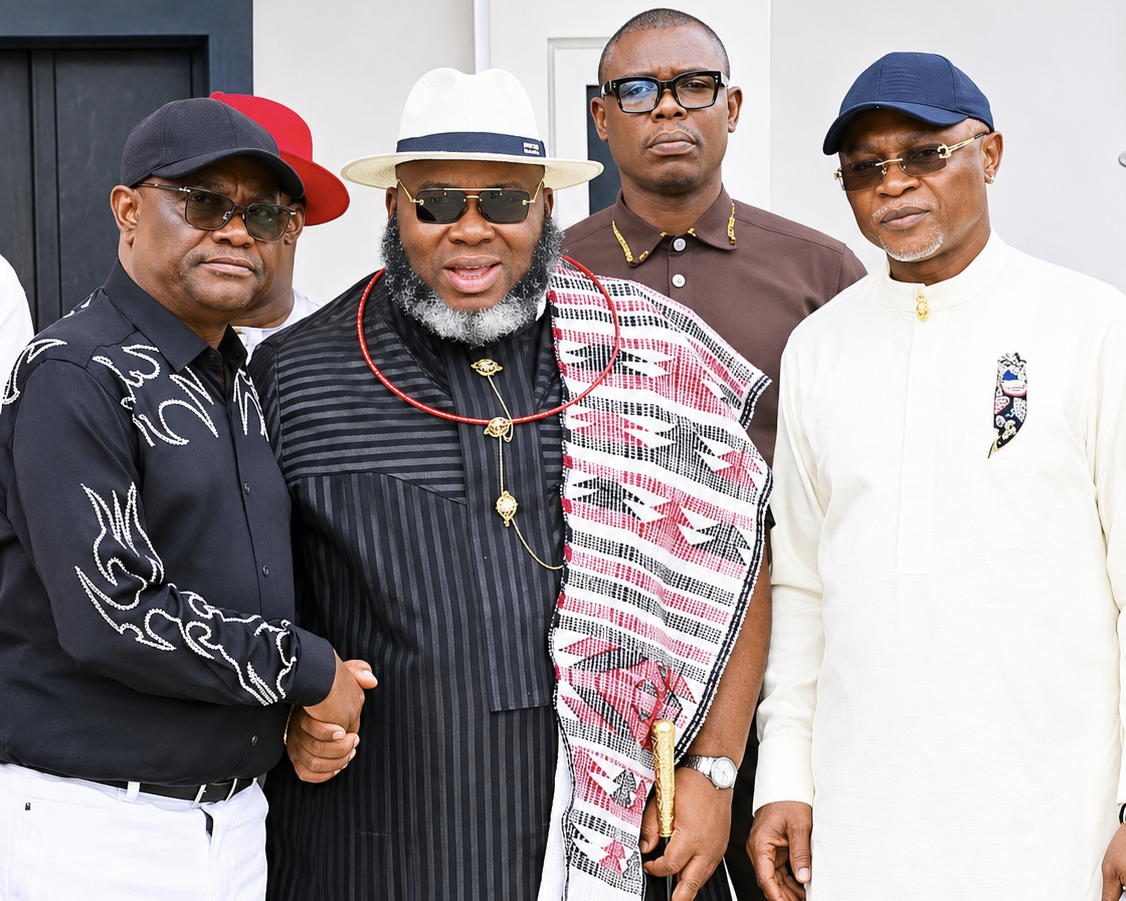
The Amanyanabo of the Chiefdoms and Principalities of the Source, Elem-Kalabari and Torusarama-Piri in Rivers State, Alhaji Mujahid Abubakr Dokubo-Asari, has stirred conversations about leadership, political responsibility and community development following his assessment of the contributions of the Minister of the Federal Capital Territory (FCT), Nyesom Wike, to the Ikwerre people.
Dokubo-Asari made the remarks during a live broadcast on his official Facebook page on Sunday, November 1, 2026, where he spoke about his relationship with Wike and the political dynamics in Rivers State.
Addressing the perception that their frequent disagreements amount to personal animosity, the Kalabari traditional ruler explained that political differences do not necessarily translate into hatred, noting that individuals can disagree on issues while maintaining mutual respect.
However, what particularly stood out in his remarks was his comparison of Wike’s contributions to the Ikwerre people with the collective achievements of prominent Kalabari political figures.
He declared:
“Add all the Kalabari big men together; they cannot do one per cent of what Wike has done for Ikwerre people.”
The statement presents a strong challenge to Kalabari’s political establishment, particularly individuals who have occupied influential positions in government and other sectors of public life.
Beyond the political implications, the remarks touch on a concern shared by many communities across the Niger Delta: the gap between political influence and tangible development at the grassroots.
For ordinary residents, the real benefits of leadership are reflected in improved roads, quality education, accessible healthcare, employment opportunities, economic empowerment and an environment where young people can build meaningful futures.
It also raises questions about how much of the influence, wealth and opportunities available to political leaders have translated into lasting benefits for the communities that produced them.
Importantly, Dokubo-Asari’s position suggests that community development should not be postponed until an individual occupies the highest political office. Those who already have access to resources, public influence and strategic positions can make meaningful contributions without necessarily becoming governors.
His remarks therefore offer an opportunity for Kalabari leaders, elders, business figures, politicians and other influential stakeholders to examine their collective responsibilities towards the future of their people.
Rather than allowing the statement to degenerate into political arguments or rivalry between ethnic groups, it could serve as an opportunity for constructive reflection on leadership, accountability and the need for measurable community development.
Ultimately, the greatest legacy of any leader is not the political position occupied or the influence commanded, but the lives transformed, opportunities created and lasting development delivered to the people.
For Kalabari, the question raised by Dokubo-Asari is one that deserves serious reflection: beyond political titles and public recognition, what lasting contributions are today’s leaders making towards the future of their people?