
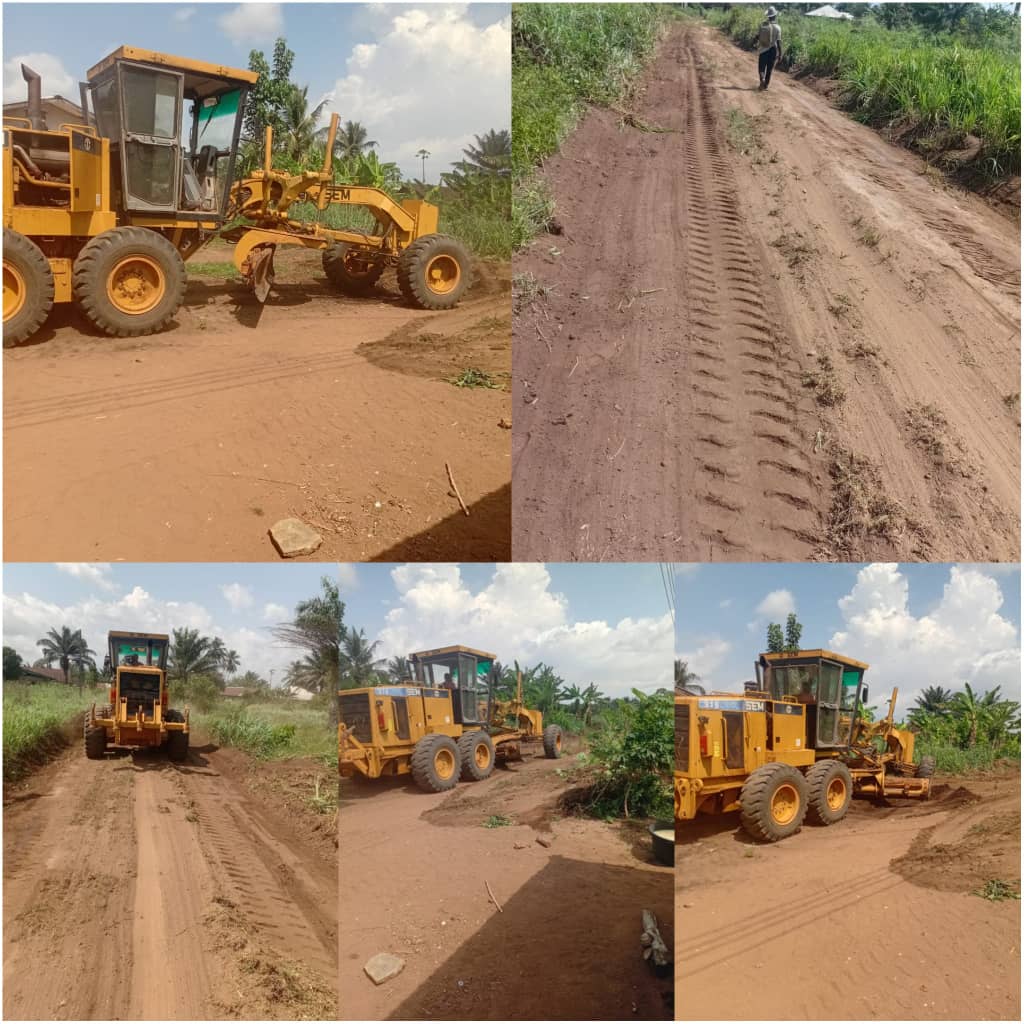

A fresh phase of subnational infrastructure recalibration has unfolded in Ipoke town, as the administration of High Chief (Hon) Caleb Ebimobowei Molos, the executive chairman of Ese-Odo local government area, advances its rural access agenda with the mechanical grading of critical township corridors.
The initiative, driven through the Works Department of Ese-Odo Local Government Area, signals what observers describe as a deliberate push to recondition neglected major roads and unlock latent economic linkages within farming communities.
Field supervision of the project was undertaken by Omotola Omogbemi, Special Adviser on Youth and Sports, whose presence underscored the administration’s emphasis on execution fidelity.
Speaking during the exercise, he noted:
“This road grading aims to ease access to neighbouring markets and enhance local economic activity in Ipoke.”
The intervention is expected to attenuate long-standing mobility bottlenecks, streamline the evacuation of farm yields, and stimulate micro-trade ecosystems that have remained largely stifled by poor road conditions.
Grassroots Sentiment and Civic Reception
Preliminary feedback from residents suggests a groundswell of approval, with locals describing the project as a pragmatic response to crumbling public facilities.
Indigenes, particularly those engaged in subsistence and small-scale commercial activities, indicated that the regraded pathways would recalibrate daily movement patterns and reduce logistical frictions associated with transporting goods.
Officials disclosed that the Ipoke exercise is not an isolated intervention but part of a rolling, territorially expansive programme designed to permeate multiple land-based communities across Ese-Odo LGA.
The administration maintains that the grading and corridor-widening scheme will proceed in sequenced phases, targeting previously underserved settlements.
Meanwhile, Policy watchers note that the Molos-led administration appears to be leveraging basic infrastructure as a catalytic instrument for rural transformation, prioritising access, connectivity, and localised economic stimulation over more capital-intensive flagship projects.
The development was confirmed in an official communication issued by Denis Pounah, Chief Press Secretary to the Executive Chairman, dated March 21, 2026.
