
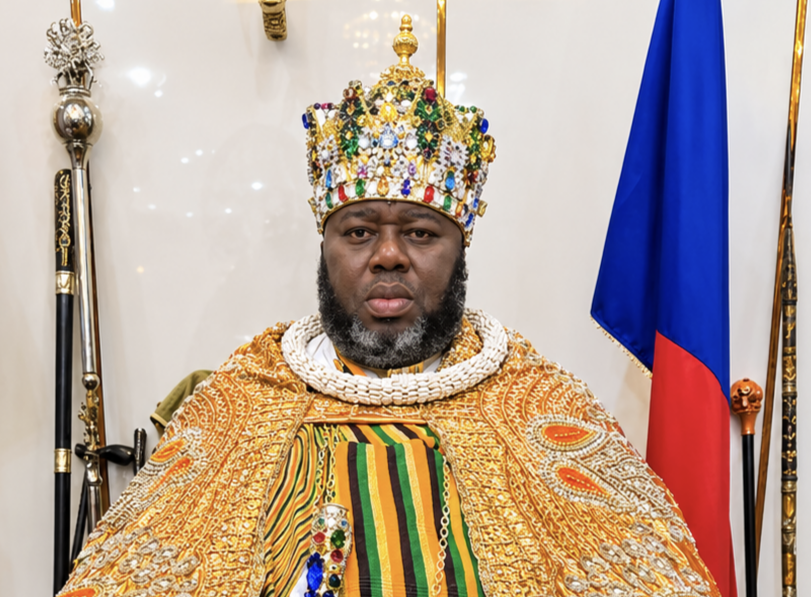
Why Asari Dokubo Remains One of Nigeria’s Most Outspoken and Widely Recognised Traditional Rulers

His royal authority, fearless public statements, Niger Delta activism and unconventional approach to traditional leadership have made him a recurring figure in Nigeria’s political, cultural and traditional conversations.
In Nigeria’s traditional institution, where many monarchs are traditionally associated with diplomacy, cultural preservation, palace protocols and discreet interventions in political matters, one royal figure continues to attract considerable public attention through his unusually outspoken personality: His Royal Majesty, Alhaji Mujahid Abubakar Dokubo-Asari, the Amanyanabo of Torusarama Piri in the Elem Kalabari Kingdom of Rivers State.
Popularly known as Asari Dokubo, the former Niger Delta activist has evolved from a prominent voice in the struggle for resource control and environmental justice into a traditional ruler whose public statements, political positions and interventions frequently generate national conversations. His emergence as a recognised traditional ruler has added another dimension to an already prominent and controversial public personality. On December 31, 2024, Rivers State Governor, Siminalayi Fubara, presented him with a certificate of recognition and staff of office as the Amanyanabo of Torusarama Piri in Degema Local Government Area, Rivers State.
What makes Asari Dokubo one of the most outspoken and widely recognised traditional rulers in contemporary Nigeria?
1. A PERSONALITY THAT CANNOT EASILY BE IGNORED
Asari Dokubo is not a monarch who limits his public engagements to palace ceremonies, cultural festivals and traditional gatherings.
He frequently expresses strong opinions on national politics, insecurity, resource control, the Niger Delta question, ethnic relations and the responsibilities of political leaders.
Whether people agree with his positions or disagree with them, his statements regularly generate discussions across Nigeria’s political and media landscape.
His outspoken nature has consequently become one of the most recognisable features of his public identity.
2. A HISTORY ROOTED IN NIGER DELTA ACTIVISM
Unlike many traditional rulers whose public identities were established primarily through hereditary succession and community leadership, Asari Dokubo’s prominence predates his emergence as a monarch.
He became widely known through his involvement in Niger Delta activism and his leadership of the Niger Delta People’s Volunteer Force (NDPVF).
His agitation brought critical issues of resource ownership, environmental degradation, political marginalisation and economic justice in oil-producing communities into national and international discussions.
However, his activism also attracted considerable controversy, particularly over militancy, armed confrontation and violence in the Niger Delta. Nevertheless, his historical involvement in the region’s struggle remains an important part of his public identity and political background, as documented in historical analyses by the Jamestown Foundation.
3. A STRONG VOICE ON IJAW IDENTITY AND NIGER DELTA INTERESTS
One of the reasons Asari Dokubo commands attention among sections of the Ijaw population is his longstanding association with the struggle for Ijaw political, economic and cultural interests.
For decades, questions surrounding resource control, environmental protection, the development of oil-producing communities and the political representation of the Niger Delta have remained central to regional conversations.
Asari has consistently positioned himself as a vocal participant in these discussions.
His approach is often direct and uncompromising, a communication style that appeals to some supporters who believe that the interests of the Niger Delta require forceful representation. To his admirers, he represents a personality unwilling to remain silent when issues affecting the region are being discussed.
4. HE COMBINES TRADITIONAL AUTHORITY WITH POLITICAL VISIBILITY
His recognition as the Amanyanabo of Torusarama Piri has formally introduced him into the traditional leadership structure of Rivers State.
However, unlike monarchs who generally maintain a cautious distance from public political debates, Asari continues to make his political opinions known.
His engagements with influential political figures have further strengthened his public visibility. In January 2026, for instance, he publicly expressed support for President Bola Tinubu’s anticipated 2027 re-election bid during a visit by the Minister of the Federal Capital Territory, Nyesom Wike, to his palace, as reported by BusinessDay. This development illustrates how his palace has become not only a centre of traditional authority but also a venue for political engagements and conversations that attract wider public attention.
5. FEARLESSNESS AND AN UNCONVENTIONAL COMMUNICATION STYLE
Perhaps one of the most defining characteristics of Asari Dokubo is his communication style.
He does not always adopt the measured and diplomatic language traditionally associated with royal institutions.
His public interventions are often passionate, direct and controversial. He is willing to address sensitive subjects and express positions that other public figures might prefer to approach with greater diplomatic restraint. This communication style has contributed significantly to his image as one of Nigeria’s most outspoken traditional rulers.
However, outspoken leadership also carries considerable responsibility. The words of a traditional ruler command attention and should ideally promote peace, responsible leadership, mutual respect and constructive engagement rather than deepen existing divisions.
6. HIS PUBLIC RECOGNITION EXTENDS BEYOND HIS TRADITIONAL DOMAIN
Asari Dokubo’s public recognition is not restricted to Torusarama Piri or the Kalabari Kingdom.
His name is familiar across different parts of the Niger Delta and Nigeria, particularly among people who have followed the region’s political history, resource-control agitation and security challenges. His media appearances, interviews, public statements and political engagements have sustained his visibility over the years.
A 2023 report by Nigerian Tribune examined his controversial public interventions and the reactions they generated, demonstrating the continuing national attention surrounding his personality. Nevertheless, national recognition should not automatically be equated with universal popularity. His public image remains polarising, with admirers, critics and others who hold differing opinions about his methods, statements and political positions.
7. A MONARCH WHO CHALLENGES CONVENTIONAL EXPECTATIONS OF TRADITIONAL LEADERSHIP
Traditional rulers are expected to preserve cultural heritage, promote peace, protect community interests and serve as custodians of their people’s values.
Asari Dokubo’s approach to traditional leadership is particularly distinctive because he brings his experience of activism, political engagement and public controversy into the palace.
His supporters may regard this as an advantage, arguing that a monarch should not be disconnected from the political, social and economic realities affecting his people.
His critics, however, may question whether his confrontational communication style is consistent with the restraint, impartiality and diplomatic responsibilities expected of traditional institutions.
This tension between traditional expectations and his unconventional public personality is part of what makes his reign a subject of continuing public discussion.
THE BIGGER QUESTION: DOES NIGERIA NEED MORE OUTSPOKEN TRADITIONAL RULERS?
Nigeria’s traditional institution is undergoing an interesting transformation.
Across the country, communities increasingly expect their monarchs to do more than preside over traditional ceremonies and cultural festivals. They expect them to speak on insecurity, unemployment, environmental challenges, political accountability, education, economic development and the general welfare of their subjects.
In this regard, Asari Dokubo represents an unconventional model of royal visibility.
His public personality demonstrates how traditional rulers can remain relevant in contemporary political conversations, although such influence must be exercised with wisdom, responsibility and a commitment to peaceful coexistence.
For the Niger Delta, where environmental degradation, oil exploration, unemployment and questions of equitable development remain important concerns, the voices of traditional institutions are particularly significant.
However, the ultimate measure of a monarch should not be how frequently he appears in the news or how controversial his statements become. It should also include the peace, unity, development and opportunities he helps create for his people.
WRAP-UP: A MONARCH WHO REMAINS IMPOSSIBLE TO IGNORE
Whether admired or criticised, Alhaji Mujahid Abubakar Dokubo-Asari has established himself as one of the most recognisable and outspoken traditional rulers in contemporary Nigeria. His journey from Niger Delta activism to recognised traditional leadership represents an unusual trajectory within Nigeria’s political and traditional landscape.
His bold communication style, longstanding involvement in regional affairs, political visibility and willingness to comment on sensitive national issues have ensured his continued presence in public conversations.
He is certainly not without controversy, and there is no conclusive national survey establishing him as Nigeria’s single most popular king.
Nevertheless, his public influence and visibility extend considerably beyond the boundaries of his immediate traditional domain. His personality continues to raise an important question about the future of traditional leadership in Nigeria:
Should a king simply preserve the throne, culture and traditions of his people, or should he also use his position, authority and influence to speak courageously on the political, economic and social challenges confronting them?
Perhaps, this is one of the most important conversations that Asari Dokubo’s unconventional approach to traditional leadership continues to provoke.