
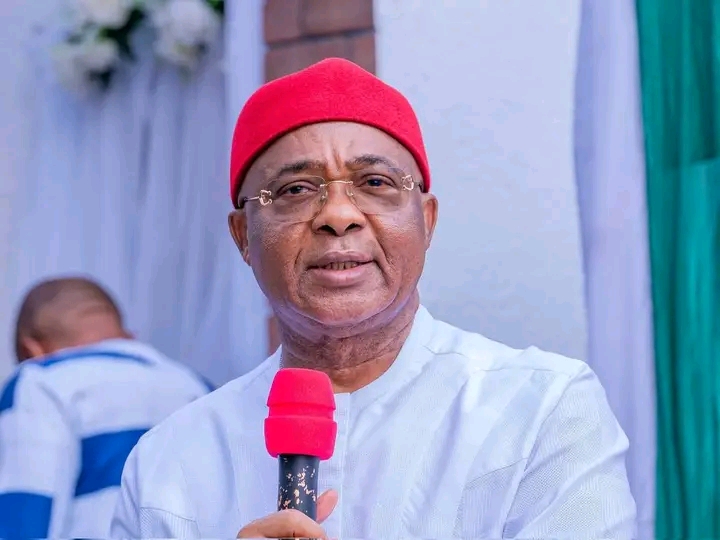

A major political recalibration has emerged within the Nigerian Senate, effectively stalling the reported ambition of Hope Uzodimma to clinch the Senate Presidency in the next assembly.
In a decisive move on Tuesday, lawmakers amended the Senate’s Standing Orders during an extended closed-door session, introducing stricter eligibility criteria for principal offices.
The revision, insiders say, is aimed at reinforcing legislative experience and institutional hierarchy within the chamber.
Under the newly adopted rules, only senators who have completed two terms will qualify to contest for top leadership roles.
More significantly, one of those terms must be the immediate term preceding the election, effectively requiring candidates to be current members of the 10th Senate seeking re-election into the 11th Senate.
A senior lawmaker, speaking on condition of anonymity, described the amendment as “a necessary step to ensure continuity, experience, and stability in the leadership of the Senate.”
Narrowed Field, High Stakes
The implications of this development are far-reaching. By limiting eligibility to returning lawmakers from the current assembly, the Senate has drastically reduced the pool of potential contenders for its top seat.
Political observers note that this rule change presents a substantial hurdle for aspirants outside the current legislative circle, including high-profile figures whose ambitions hinge on transitioning into the Senate from executive positions.
“This is not just a procedural tweak; it’s a structural shift,” a political analyst said. “It ensures that only those deeply embedded in the legislative process can rise to its highest offices.”
As the race for leadership in the 11th Senate gradually takes shape, the new rules are expected to redefine alliances, strategies, and the balance of power within Nigeria’s upper legislative chamber.
