
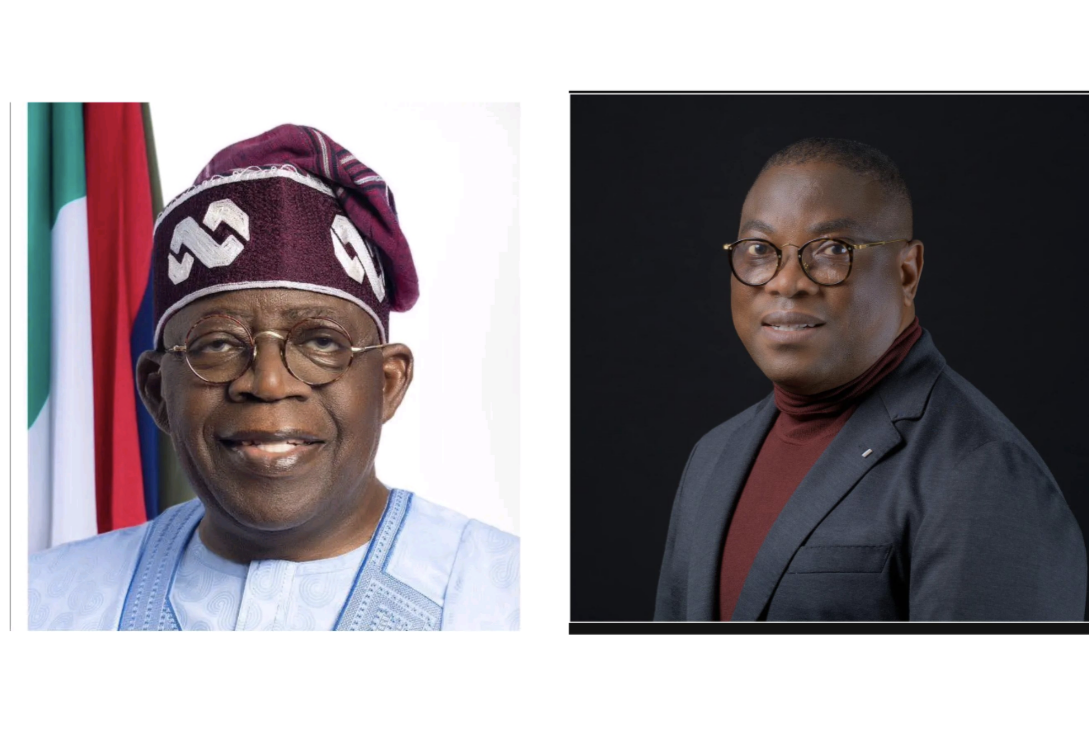
Opinion: Niger Delta Must Not Be an Afterthought – Kuku Defends Tinubu, Responds to Banigo Over Coastal Highway

Arogbo-Ibe Voice Reporters (AIV) has received an opinion article authored by Hon. Kingsley Kemebradigha Kuku, addressing the ongoing public debate surrounding President Bola Ahmed Tinubu, the Lagos–Calabar Coastal Highway and the need to ensure the Niger Delta receives fair and meaningful inclusion in Nigeria’s national development agenda.
In the article, Kuku responds to Dr. Youpele Banigo’s position on the coastal highway project, presenting his views on national infrastructure, the political rights of the Ijaw people, the Niger Delta’s contribution to Nigeria’s economy, project financing, engineering challenges, environmental protection and public accountability.
Read the full opinion article by Hon. Kingsley Kemebradigha Kuku below.
THE NIGER DELTA MUST NOT BE AN AFTERTHOUGHT: A RESPONSE TO DR. YOUPELE BANIGO ON PRESIDENT TINUBU, THE LAGOS–CALABAR COASTAL HIGHWAY AND THE RIGHT TO NATIONAL DEVELOPMENT.
INTRODUCTION: A DIFFERENCE OF OPINION MUST NOT BECOME A TEST OF IJAW LOYALTY
The public discussion surrounding my support for President Bola Ahmed Tinubu and the Lagos–Calabar Coastal Highway has raised important questions about political judgment, the representation of the Ijaw people, the history of Niger Delta development and the responsibility of public figures to speak honestly about the region’s interests.
I welcome robust debate. The Niger Delta has paid too high a price for its contribution to Nigeria’s economic survival for its people to become indifferent to the decisions that shape their future. Questions about the coastal highway’s route, financing, environmental implications, engineering design and benefits to host communities are legitimate. They deserve evidence-based answers, not political slogans.
However, disagreement must not be transformed into a contest over who is more entitled to speak for the Ijaw nation. Nor should an individual’s political position be treated as proof of disloyalty to the people.
My response to Dr. Youpele Banigo is therefore grounded in three principles: the freedom to hold and express a political opinion, the need to examine national infrastructure on its merits, and the imperative that the Niger Delta must receive fair and meaningful inclusion in Nigeria’s development.
I support President Tinubu’s efforts to advance the Lagos–Calabar Coastal Highway because I believe a properly designed and executed coastal transport corridor could help address longstanding connectivity deficits in the southern part of Nigeria. That support does not mean that I consider every government decision beyond scrutiny. It does not mean that I speak for every Ijaw person. And it certainly does not mean that the interests of the Niger Delta should be subordinated to partisan loyalty.
The central question is not whether I am entitled to support the President. I am. The more consequential question is whether Nigeria can build a major coastal transport corridor that recognises the Niger Delta’s geography, economy, environment, communities and legitimate expectations.
That is the issue before us.
1. NO INDIVIDUAL OWNS THE IJAW POLITICAL CONSCIENCE
The Ijaw nation is a historic and culturally connected people whose communities extend across several states and whose experiences of oil exploration, environmental degradation, underdevelopment and political marginalisation have shaped a powerful collective consciousness.
But a shared identity does not extinguish individual political judgment.
Ijaw people, like other Nigerians, have the right to support different political parties, candidates and public policies. They may disagree about President Tinubu, Governor Douye Diri, the Federal Government’s development priorities or the best way to secure the future of the Niger Delta. Such disagreements are part of democratic life.
I have not claimed that every Ijaw person supports President Tinubu. I do not possess the authority to bind every Ijaw man or woman to a political position, and I have no intention of pretending otherwise.
My support is my considered political judgment, informed by my experience in public service, my understanding of the Niger Delta’s development challenges and my assessment of the importance of major national infrastructure.
Equally, Dr. Youpele Banigo is entitled to his own political judgment. What is unacceptable is the suggestion that one person’s disagreement should be used to question another person’s right to express a different view.
The Ijaw nation is not a political party. Its unity cannot depend on compulsory unanimity. Indeed, genuine unity is strengthened when people can disagree without being treated as enemies of their own people.
Our common interest should be to ensure that whoever occupies the Presidency understands the strategic importance of the Niger Delta and fulfils the country’s obligations to its people.
2. THE COASTAL HIGHWAY IS A NATIONAL DEVELOPMENT QUESTION
The Lagos–Calabar Coastal Highway has been presented as a major transport infrastructure project intended to connect communities and economic centres along Nigeria’s southern coastline.
Its significance goes beyond the movement of vehicles. A properly planned corridor could improve access to markets, reduce some transport bottlenecks, support tourism, stimulate commercial activity and strengthen links among ports, industrial centres, agricultural communities and urban settlements.
For the Niger Delta, the question is particularly important. The region has enormous economic potential but faces serious transport and infrastructure constraints. Many communities remain difficult to access by road. Waterways are indispensable to local mobility, while flooding, unstable soils, wetlands and extensive river systems make conventional road construction complicated and expensive.
These difficulties are real. They must be taken seriously by engineers, planners, financiers and environmental experts.
But they cannot, by themselves, become a permanent argument against development.
If difficult terrain were sufficient reason to abandon major infrastructure, some of the world’s most consequential bridges, tunnels, causeways and transport corridors would never have been built.
The relevant questions are whether the proposed route is technically feasible, whether the design is appropriate, whether the cost is justified, whether the environmental consequences can be responsibly managed, and whether the benefits outweigh the risks.
That is the standard by which the coastal highway should be assessed.
3. DIFFICULT GEOGRAPHY IS AN ENGINEERING CHALLENGE, NOT A VERDICT AGAINST DEVELOPMENT
International experience demonstrates that governments can undertake ambitious infrastructure projects in difficult geographical environments. These examples do not prove that every proposed Nigerian route is automatically feasible or economically justified. They demonstrate something more fundamental: difficult terrain calls for sound engineering and careful financing, not reflexive surrender.
The Lake Pontchartrain Causeway, United States
The Lake Pontchartrain Causeway in Louisiana, United States, extends approximately 38.4 kilometres across Lake Pontchartrain. Guinness World Records recognises it as the longest continuous bridge over water.
The causeway is an instructive example of infrastructure built across a substantial body of water to connect communities and improve transport.
Louisiana’s experience does not mean that the Niger Delta’s wetlands and waterways present identical engineering conditions. They do not. It does, however, illustrate that water and difficult geography are not automatic barriers to ambitious transport infrastructure.
The lesson is that engineering must respond to the terrain.
The Padma Bridge, Bangladesh
Bangladesh’s Padma Bridge, approximately 6.15 kilometres long, opened to traffic on 26 June 2022. It provides a major crossing over the Padma River and was designed to improve connectivity between parts of the country that had faced substantial transport constraints.
The project required complex engineering in a river environment characterised by challenging hydrological and geological conditions.
The Padma Bridge demonstrates how infrastructure can become an instrument of national integration when it is designed to address a genuine connectivity problem.
Neither the Padma Bridge nor the Lake Pontchartrain Causeway should be used as a simplistic cost comparison with the Lagos–Calabar Coastal Highway. Their lengths, engineering requirements, financing structures and economic contexts differ. Their relevance lies in the broader principle that challenging physical environments demand appropriate technical solutions.
The Niger Delta deserves the same seriousness of purpose.
Its waterways, mangroves, floodplains, soft soils and settlements require careful investigation. Some locations may justify elevated structures, bridges, viaducts, special foundations or alternative alignments. Other locations may require a different solution altogether.
The proper answer must emerge from competent engineering, not political convenience.
4. THE NIGER DELTA’S CONTRIBUTION TO NIGERIA’S WEALTH MUST INFORM THE DEBATE
The Niger Delta occupies a central position in Nigeria’s petroleum economy. Oil and gas production from the region has generated substantial public revenue, foreign exchange and economic activity for the Federation over many decades.
The Nigerian Upstream Petroleum Regulatory Commission reported that Nigeria’s average crude oil production, excluding condensates, was approximately 1.53 million barrels per day in September 2026. The reported monthly average for August was approximately 1.50 million barrels per day.
These figures are useful indicators of the scale of Nigeria’s petroleum production. They are not, however, a statement of the Federal Government’s net revenue.
To illustrate the distinction, production of 1.53 million barrels per day at an assumed price of US$70 per barrel would produce gross sales of approximately US$107.1 million per day, or about US$39.1 billion over 365 days if production and price remained constant.
That is an illustration, not an estimate of actual national earnings. Realised prices vary; production fluctuates; and operating costs, contractual arrangements, royalties, taxes, joint-venture interests, financing commitments and other obligations affect the amounts ultimately received by government.
The point is not to suggest that petroleum receipts can be freely diverted to any infrastructure project. They cannot. Nor should oil wealth be used to excuse wasteful expenditure or unsustainable borrowing.
The point is that a region which has contributed so substantially to national revenue has a legitimate interest in how national infrastructure is distributed and how its own communities are connected to economic opportunity.
For too long, development debates in the Niger Delta have been dominated by the contradiction between the region’s enormous economic contribution and the persistent infrastructure deficits experienced by many of its communities.
That contradiction must be confronted.
The coastal highway should therefore be assessed not merely as a road construction contract but as a potential component of a wider development strategy. Its success should be measured by more than kilometres of pavement. It should also be measured by improved connectivity, commercial opportunities, local employment, access to public services and the extent to which communities along the corridor benefit from the investment.
5. COST MUST BE SCRUTINISED, BUT IT MUST NOT BE USED AS AN AUTOMATIC VETO
The estimated cost of the Lagos–Calabar Coastal Highway has attracted substantial public debate. Reuters reported in July 2025 that the overall project was estimated at approximately US$11 billion, with an initial 47.47-kilometre section supported by a syndicated financing arrangement of about US$747 million.
These are reported estimates and financing figures, not proof of the final outturn cost of the entire highway. The public must be able to examine the approved scope, contract values, financing terms, subsequent variations and actual expenditure as the project progresses.
The cost of a major road project cannot responsibly be evaluated by multiplying its length by a single standard rate and assuming that every kilometre presents identical conditions. Terrain, soil stability, bridges, interchanges, drainage, flood protection, land acquisition, utility relocation and other engineering requirements can produce substantial differences in construction costs.
The Federal Ministry of Works has itself described difficult pits and subsoil conditions in parts of the coastal highway alignment, including locations where redesign and ground improvement have been necessary. Such explanations should be assessed against the underlying technical reports and independently verified costs.
At the same time, invoking engineering complexity cannot be a licence for unlimited expenditure.
The Federal Government must provide credible information on the following:
1. The approved route and engineering design for each section.
2. The estimated and actual cost per kilometre, with explanations for material variations.
3. The scope of bridges, flyovers, drainage systems, flood-protection works and other major structures.
4. The procurement method, contract awards and material variations.
5. The financing structure, interest and fees, repayment obligations and allocation of risk.
6. The environmental and social impact assessments and the measures adopted to address identified risks.
7. The anticipated economic benefits and the basis on which the project’s long-term value is assessed.
Transparency is not hostility to the project. It is a condition of public confidence.
My position is therefore straightforward: the highway’s cost must be subjected to rigorous scrutiny, but cost alone should not become an automatic veto on infrastructure that may have significant national and regional value.
The proper task is to establish what the project should cost, why it should cost that amount, how it should be financed and whether the public will receive value commensurate with the expenditure.
6. THE ROUTE THROUGH THE NIGER DELTA MUST BE CLARIFIED, NOT LEFT TO SPECULATION
Recent public statements by the Minister of Works have generated concern about the alignment of the Lagos–Calabar Coastal Highway and the relationship between the project and the East–West Road.
On 12 October 2026, the Minister stated that the coastal highway had not been abandoned and that the reconstruction of approximately 400 kilometres of the East–West Road was an additional project. He also stated that surveying and design work remained under way for parts of the coastal corridor extending through Edo, Delta, Bayelsa and Rivers states.
That clarification is important. It would be premature to declare that Bayelsa State has been definitively excluded from the highway or that the entire coastal project has been abandoned in favour of the East–West Road.
But the clarification does not remove the need for greater public disclosure.
The Niger Delta public should not be expected to rely indefinitely on competing interpretations of press statements, political assurances or incomplete route information. The Federal Ministry of Works should publish the relevant approved designs and explain the status of each section, including those still undergoing survey, design, procurement or environmental assessment.
For Bayelsa and other Niger Delta states, the key questions are practical:
* What is the proposed alignment through each state?
* Where will the coastal highway follow a new alignment, and where will it use or connect with existing roads?
* What technical and environmental studies support those decisions?
* How will the corridor connect coastal communities and economic centres?
* What are the implications for local access, flood resilience, land acquisition and community livelihoods?
* What are the timelines for design approval, procurement and construction?
A road corridor may legitimately be redesigned where the original alignment presents serious technical, environmental or financial difficulties. Such changes should be supported by documented engineering reasons and made transparent to affected communities.
The issue is not that every state must receive an identical number of kilometres regardless of geography or cost. The issue is that the national purpose of the project must not be used to obscure the treatment of individual states or communities.
Bayelsa and the wider Niger Delta deserve clarity, meaningful consultation and a technically defensible explanation of how the final route will serve the region.
7. THE HISTORICAL CONTEXT: THE COASTAL CORRIDOR DID NOT BEGIN WITH TODAY’S POLITICAL ADMINISTRATION
The idea of a coastal transport corridor serving the Niger Delta predates the current administration.
The 2008 Technical Committee on the Niger Delta, chaired by Ledum Mitee, is reported to have recommended a coastal highway as part of a broader response to the region’s development challenges. Public accounts of the post-amnesty period also refer to wider infrastructure proposals involving roads, railways and urban development.
These historical references matter because they show that the need for improved coastal connectivity has long been part of the Niger Delta development conversation.
They must, however, be stated accurately. The 2009 Amnesty Proclamation itself dealt with amnesty and the surrender of arms; it should not be represented as expressly containing every infrastructure commitment discussed during the wider post-amnesty process.
In the same way, historical proposals and political commitments should not be confused with completed projects, approved contracts or binding expenditure authorisations.
The distinction does not diminish their significance. It helps establish the correct historical record.
During the administration of President Umaru Musa Yar’Adua, the Federal Government pursued the amnesty initiative as part of an effort to reduce militancy and address the crisis in the Niger Delta. The wider political context included discussions about infrastructure, economic inclusion and the long-term conditions necessary for peace.
The coastal road idea formed part of that broader development conversation. Successive administrations have had opportunities to revisit, refine, finance or implement elements of the region’s outstanding infrastructure agenda.
It is therefore entirely reasonable to assess the present highway project as part of a longer national conversation about coastal connectivity, while insisting that historical proposals be distinguished from formal commitments and actual implementation.
Development should not be abandoned simply because an idea originated under a previous administration. Nor should any government claim exclusive ownership of a national aspiration that has evolved over many years.
If the present administration can deliver a technically sound, financially responsible and inclusive coastal highway, it will have advanced an objective whose importance extends beyond party politics.
8. MY RECORD IN PUBLIC SERVICE: ACKNOWLEDGE THE PAST, BUT DO NOT ABANDON THE FUTURE
I served as Special Adviser to President Goodluck Jonathan on Niger Delta Affairs and as Chairman of the Presidential Amnesty Programme. I undertook those responsibilities with a sense of duty to the President, the Federal Government and the people whose hopes were invested in the peace and development process.
I was not the Minister of Niger Delta Affairs, and I was not the Minister of Works. My responsibilities must be understood in their proper institutional context.
I do not claim that the period was without shortcomings. Public service should not be approached as an exercise in self-congratulation. The record must be available for examination, including what was achieved, what fell short of expectations and what remained unfinished.
Following President Yar’Adua’s death and the transition to the Jonathan administration, important elements of the wider post-amnesty development agenda remained incomplete. I was part of the administration and do not suggest that the record should be insulated from scrutiny simply because I served within it.
But an honest assessment must distinguish between acknowledging unfinished work and arguing that future governments should not complete it.
If a road, railway, urban development initiative or other important infrastructure project was not delivered under one administration, that failure does not make the project unnecessary. It creates an obligation for subsequent administrations to assess the outstanding need and determine what can responsibly be done.
The Niger Delta cannot afford a politics in which every administration abandons the unfinished development agenda of its predecessor merely to avoid giving political credit to another party.
I support the present administration’s willingness to pursue the coastal highway. I want that willingness matched by engineering competence, financial transparency, environmental responsibility and genuine inclusion of the Niger Delta.
My support is not a denial of the past. It is an argument that the future must not be held hostage by the failures of the past.
9. PROJECT GAZELLE AND PROJECT LEOPARD: FINANCING MUST BE EXAMINED WITH OPEN EYES
The scale of Nigeria’s infrastructure requirements raises a difficult but unavoidable question: how should major projects be financed when public resources are limited and competing demands are enormous?
The answer cannot be that borrowing is always wrong. Nor can it be that every financing arrangement is justified merely because it releases money for government expenditure.
Nigeria has used a variety of financing mechanisms, including syndicated loans, external borrowing, public-private arrangements and crude-backed pre-export facilities. Project Gazelle and Project Leopard have featured in public discussions about financing secured against future oil deliveries.
In August 2026, the National Economic Council approved a proposal for a US$4.5 billion Project Gazelle 2 facility intended to refinance the outstanding balance of the original Project Gazelle arrangement and provide additional liquidity. Public reporting stated that the proposed structure would reduce the crude volume pledged under the original facility from approximately 90,000 to 78,750 barrels per day. The terms, execution and drawdown of the refinancing must be distinguished from the announcement of its approval.
Project Leopard has also been reported as a crude-backed financing arrangement. Such facilities can bring forward funds for current use, but they also create future obligations and affect the volume of crude available to support other public needs.
These arrangements are not free money. Their true cost depends on interest rates, fees, the price and volume of crude committed, repayment schedules, contractual terms and the value of future receipts surrendered to meet the obligations.
The appropriate lesson for the coastal highway is not that crude-backed financing should automatically be used. It is that the Federal Government should consider financing options transparently and compare their total costs and risks before committing public resources.
Any financing proposal for the highway should answer several questions:
* What portion will be funded from budgetary allocations, and what portion from external financing or other sources?
* What is the full cost of borrowing, including fees and contingent liabilities?
* Will future petroleum receipts or other public revenues be pledged?
* What protections exist against excessive cost escalation and delays?
* How will repayment obligations affect future budgets and other development priorities?
* Can the project generate wider economic benefits without relying on speculative revenue projections?
If a crude-backed arrangement is considered, the public should be informed of the volumes committed, the repayment period and the opportunity cost to future public revenue. If external borrowing is used, the terms and fiscal risks should be disclosed. If private investment is proposed, the allocation of risks, returns and public obligations should be clear.
The objective must be to finance infrastructure without undermining the future fiscal capacity of the country.
10. THE BADAGRY–SOKOTO HIGHWAY AND THE NATIONAL INFRASTRUCTURE QUESTION
The Lagos–Calabar Coastal Highway is not the only major transport project raising questions about cost, financing and national priorities.
The proposed Badagry–Sokoto Superhighway has also featured in the Federal Government’s infrastructure programme. In April 2026, Reuters reported that the President had sought legislative approval for a US$516 million syndicated foreign loan for the initial development of the proposed corridor, within a broader medium-term borrowing plan.
The loan proposal should not be misrepresented as proof that the entire highway has already been financed or completed. It illustrates, however, the scale of Nigeria’s infrastructure ambitions and the financing choices facing the government.
These projects must be judged consistently.
If the country is prepared to consider major investments intended to improve connectivity across its different regions, then the coastal corridor deserves a serious assessment of its own merits. It should neither be privileged without scrutiny nor dismissed because it serves the southern coastline.
National integration requires a balanced approach to transport infrastructure. Roads, railways, ports and inland connections should work together to link production centres with markets and communities with opportunities.
The appropriate question is whether each project is properly designed, affordable, strategically justified and capable of delivering measurable public value.
The Niger Delta should not have to argue that its difficult geography makes it more deserving than other regions. It should simply be able to demand that its legitimate infrastructure needs be assessed fairly under the same national development principles applied elsewhere.
11. THE ENVIRONMENT AND HOST COMMUNITIES MUST BE AT THE CENTRE OF EXECUTION
No serious defence of the coastal highway can ignore the environmental sensitivity of the Niger Delta.
The region contains extensive wetlands, mangroves, creeks, rivers, floodplains, fishing grounds and settlements whose livelihoods depend on the integrity of their surroundings. Infrastructure development that fails to account for these realities could create damage that outlasts the immediate benefits of construction.
The highway must therefore be guided by credible environmental and social assessments, proper drainage and flood modelling, appropriate foundation design, and safeguards against avoidable harm to waterways and vulnerable ecosystems.
Where land acquisition is required, affected people must receive fair treatment in accordance with applicable law. Where livelihoods are disrupted, the response must be practical and properly administered. Community engagement must take place before consequential decisions are finalised, not merely after public controversy has arisen.
The communities along the route must not be treated as obstacles to construction or as spectators to a project whose consequences they will live with for generations.
They should be treated as principal stakeholders.
That means providing accessible information about the route, explaining the implications of design changes, establishing credible channels for complaints and consultation, and creating realistic opportunities for local employment and procurement where skills, standards and project requirements permit.
It also means that promises of economic benefit must be grounded in a credible plan. A highway does not automatically transform every community it passes. Its effects depend on access roads, transport links, market connections, safety, land-use planning, supporting infrastructure and the ability of local people to participate in the economic opportunities created.
A responsible coastal highway programme should therefore include a clear strategy for connecting surrounding communities to the main corridor, protecting local access and linking the road to the region’s wider economic potential.
Development should be judged not simply by what is built, but by how fairly and effectively its benefits reach the people affected by it.
12. PRESIDENT TINUBU’S POLITICAL WILL SHOULD BE MATCHED BY ACCOUNTABILITY
I recognise President Tinubu’s political will to pursue major infrastructure projects and support the completion of the Lagos–Calabar Coastal Highway.
In my judgment, Nigeria needs continuity of purpose in national infrastructure. Projects of this scale require sustained political commitment, competent administration, dependable financing and the discipline to resolve technical challenges without losing sight of the public interest.
But political will must not become an excuse to disregard scrutiny.
The President’s commitment should be matched by transparent procurement, sound engineering, reliable cost information, environmental safeguards, consultation with affected communities and a clear explanation of the final alignment through the Niger Delta.
Where redesign is necessary, the reasons should be made public. Where costs rise, the variations should be explained. Where financing creates future obligations, the terms should be disclosed. Where communities face disruption, the government should provide credible mechanisms for addressing it.
These are not demands made by opponents of the project. They are reasonable expectations of responsible public administration.
I support the highway because I believe the objective of improved coastal connectivity is important. I also believe that the best way to protect the project’s credibility is to insist that it meets the highest reasonable standards of technical competence, fiscal responsibility and social inclusion.
The President should not have to choose between political determination and accountability. A well-governed project requires both.
13. THE CREEK HAVEN INSINUATION AND THE QUESTION OF MOTIVE
I am also concerned by insinuations that my position was prompted by a brief from Creek Haven or that I was acting at the instance of Governor Douye Diri.
Public arguments should be assessed on the basis of their substance and evidence. If a person makes a claim about the route, cost, engineering or financing of the highway, that claim should be examined against the relevant facts. It should not be dismissed or accepted merely because of speculation about the speaker’s motives.
My position on the coastal highway is a matter of public record and personal judgment. I have set out the reasons for my support, the qualifications that accompany it and the conditions I believe should govern implementation.
I do not need to attribute my views to another person or institution in order to defend them.
Nor should disagreement with my position be converted into an allegation that I am acting on instructions. Anyone advancing such an allegation should provide evidence rather than rely on insinuation.
Governor Douye Diri’s responsibilities as Governor of Bayelsa State are distinct from my personal right to express a view on national policy. The legitimate interests of Bayelsa and the Niger Delta must be discussed on their merits, regardless of who expresses concern or support.
The same standard should apply to all of us: examine the evidence, state the facts accurately, distinguish opinion from established information and avoid substituting personal attacks for public reasoning.
14. WHAT THE FEDERAL GOVERNMENT MUST NOW DO
The way forward is neither to abandon the coastal highway in the face of controversy nor to defend it uncritically. It is to establish a transparent, technically sound and inclusive process capable of sustaining public confidence.
I therefore call on the Federal Government and the relevant authorities to take the following steps:
First, publish the route and design information. The Ministry of Works should provide a clear account of the status of each section, especially the sections undergoing survey and design through Edo, Delta, Bayelsa and Rivers. The public should be able to distinguish completed works, active construction, approved designs and proposals still being assessed.
Second, explain the engineering decisions. Where the alignment has changed, the Ministry should publish an appropriate technical explanation of the alternatives considered, the reasons for the selected option, and the implications for cost, construction time, flood resilience and community access.
Third, disclose the project’s financial structure. Nigerians should have access to credible information on contract values, procurement, variations, financing terms, repayment obligations and the basis for cost estimates. Commercial confidentiality should not be used to obscure material public liabilities.
Fourth, strengthen environmental and social safeguards. The sensitive ecology of the Niger Delta requires proper assessment, monitoring and enforcement. Construction must not proceed on the assumption that environmental damage or the disruption of local livelihoods is an acceptable price for speed.
Fifth, make host communities partners in development. Consultation, fair compensation where applicable, local employment, procurement opportunities and reliable access to the economic benefits of the corridor should be part of implementation planning.
Sixth, connect the highway to a broader Niger Delta development strategy. The corridor should complement existing roads, waterways, ports, industrial facilities, agricultural production, tourism and local transport systems. Its value will be greater if it helps unlock economic opportunities rather than functioning as an isolated strip of pavement.
Finally, report progress against measurable outcomes. The public should receive periodic updates on expenditure, milestones, construction quality, environmental compliance and the benefits expected for communities along the route.
These measures would help convert controversy into constructive accountability. They would also protect the President’s stated infrastructure ambitions by demonstrating that political commitment is being translated into verifiable public value.
CONCLUSION: SALUTING THE AUDACITY OF PRESIDENT TINUBU—AND DEMANDING A PLACE FOR THE NIGER DELTA
History often remembers leaders not merely for the decisions they make, but for the scale of the challenges they are willing to confront. The Lagos–Calabar Coastal Highway is an ambitious undertaking, and President Bola Ahmed Tinubu deserves recognition for the political audacity to pursue a transport corridor of such national significance. In a country where major infrastructure projects can be constrained by cost, difficult terrain, competing priorities and political controversy, the willingness to embark on a project of this magnitude deserves to be acknowledged.
I salute the President’s determination to advance the coastal highway. My position is informed by the conviction that Nigeria must continue to invest in infrastructure capable of connecting communities, opening economic opportunities and strengthening national integration. The Niger Delta, with its waterways, wetlands, oil and gas resources, maritime potential and long-neglected transport needs, should be among the principal beneficiaries of that ambition.
But audacity must be matched by responsibility, and ambition must be translated into enduring public value. The project must be guided by sound engineering, transparent procurement, independently verified costs, prudent financing and strict environmental safeguards. Its final alignment must be clearly explained, and the people of the Niger Delta must not be left wondering whether a highway conceived in the name of coastal connectivity will adequately serve their communities.
My salute to President Tinubu is therefore not a blank cheque. It is an expression of support for the ambition to build, accompanied by a firm demand that the project be executed properly and inclusively. A great infrastructure project should not merely demonstrate the capacity of a government to construct a road; it should demonstrate the capacity of the Nigerian state to deliver development responsibly, fairly and sustainably.
I also believe that national development must rise above partisan ownership. The coastal highway should not be reduced to a contest over which administration deserves the credit or which political figure is entitled to express support. If successfully delivered, its benefits should belong to Nigerians across generations. If shortcomings emerge, they must be addressed in the public interest.
As an Ijaw son and a Niger Delta advocate, I will continue to insist that our region must not be an afterthought in a project whose very identity is coastal. Our difficult terrain must invite engineering ingenuity, not exclusion. Our contribution to national wealth must strengthen the case for equitable development, not leave us perpetually pleading for inclusion. And our communities must be treated as partners in progress, not as obstacles along the route.
President Tinubu has chosen to undertake an ambitious project. I acknowledge that audacity and support the pursuit of its legitimate national objectives. The responsibility now is to ensure that the highway is technically sound, financially responsible, environmentally sustainable and socially just—and that its promise reaches the Niger Delta communities whose lives and livelihoods are bound to the coastline.
Let history record the ambition to build. Let the quality of execution establish its worth. And let the people of the Niger Delta be able to say, when the highway is delivered, that this great national undertaking did not pass them by, but connected them to a future of greater opportunity, dignity and prosperity.
Hon. Kingsley Kemebradigha Kuku
Lawyer | Public Affairs Analyst | Former Legislator | Peace and Conflict Resolution Expert| Former Presidential Advisor.