
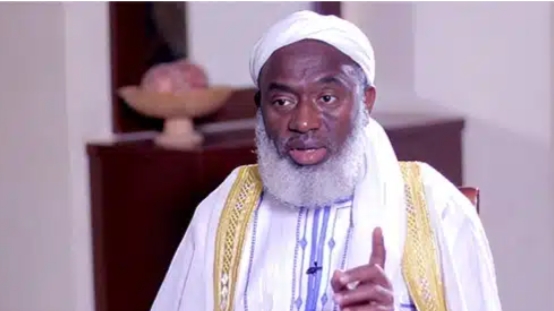

Islamic cleric, Sheikh Ahmad Gumi, has expressed concern over what he described as the collapse of opportunities for dialogue with armed bandit groups operating in parts of Nigeria.
Gumi, who became known for previous engagements and visits aimed at encouraging negotiations with bandits in their enclaves, said religious leaders no longer have access to facilitate peace discussions.
Speaking in a video circulating online, the cleric questioned the government’s approach of classifying bandit groups as terrorist organisations.
According to him, maintaining avenues for dialogue could contribute to de-escalation and conflict resolution.
“We don’t want to push them into terror beyond what they are doing now because it can get worse,” Gumi said.
He argued that some of the groups had previously shown willingness to engage in discussions and suggested that closing communication channels could complicate efforts toward peaceful outcomes.
“They have shown us their willingness to negotiate, so people that are ready to negotiate, why are you rushing to declare them bandits so that you can use whatever weapons you bought,” he stated.
Gumi further claimed that before the designation of such groups as terrorists, some individuals linked to insurgent activities had previously been apprehended and handed over to authorities.
“Before they used to catch Boko Haram and present them to the authorities in Zamfara, but now they are all terrorists,” he said.
The cleric maintained that religious leaders previously served as one of the remaining channels for engagement but said such efforts had now become impossible.
“Secondly, the only door that is remaining is for us clergy to go in and negotiate with them, that is closed permanently,” he added.
Meanwhile, Gumi recently responded to criticism surrounding his visit to Ibadan, Oyo State, late last year.
In a statement shared via his Facebook page, he dismissed claims linking the visit to political or ideological motives.
According to him, allegations suggesting his presence in the South-West was connected to efforts to influence religious dynamics in the region were unfounded.
Gumi stated that he was not invited by any Muslim group in the South-West but attended the engagement in his capacity as a representative of Islamic scholars from Northern Nigeria.
