
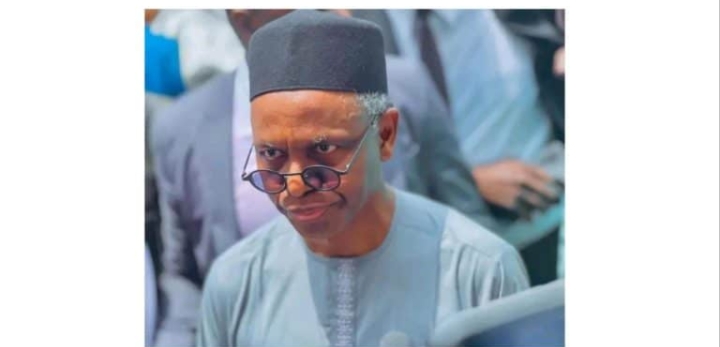

A Kaduna State High Court has refused the bail application of former governor, Nasir El-Rufai, citing the gravity of the allegations against him and concerns over possible interference with ongoing investigations.
Justice D.H. Khobo delivered the ruling on April 21, 2026, in a case filed by the Federal Republic of Nigeria through the Independent Corrupt Practices and Other Related Offences Commission (ICPC).
The court held that the circumstances surrounding the case did not favour granting bail at this stage, stressing that the interest of justice required the defendant to remain in custody pending trial.
“In the instant application… given the gravity of the nine-count charge… the interest of justice is best served by ensuring the Applicant remains available for an accelerated trial,” Justice Khobo ruled.
El-Rufai had applied for bail on self-recognisance or on liberal terms, arguing that the charges were non-capital and that he posed no flight risk due to his strong community ties and known assets.
He also informed the court that he voluntarily returned from Egypt to honour an invitation by authorities, describing the charges as “fundamentally defective” and “unintelligible.”
Additionally, he cited health concerns, claiming the need for specialist medical care.
However, the court rejected the medical argument, noting that no sufficient evidence was provided to support the claim.
The ICPC opposed the bail application, describing the alleged offences as “economically sabotaging” and warning that the former governor could interfere with witnesses and investigations, particularly as other suspects remain at large.
The anti-graft agency also alleged that El-Rufai obstructed law enforcement officers at the Nnamdi Azikiwe International Airport earlier in February 2026.
In its final ruling, the court ordered that El-Rufai remain in ICPC custody pending trial and directed that proceedings be conducted on an accelerated basis.
Hearing dates have been fixed for June 1, 2, 3, and 4, 2026, for day-to-day trial sessions.
The decision marks a significant development in the high-profile case, as the former governor prepares to face full trial over the corruption allegations.
