
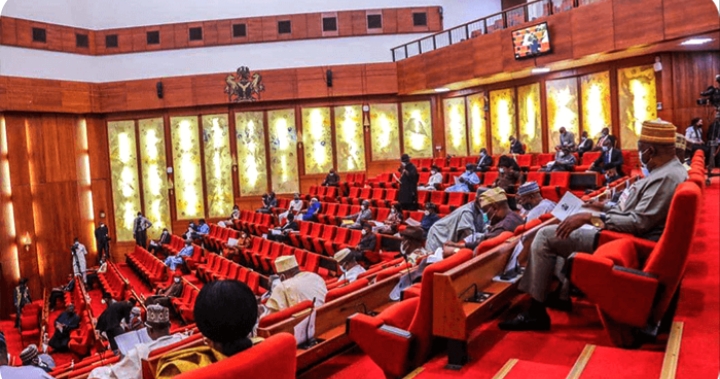

The leadership of the Nigerian Senate is set to hold a high-level meeting with officials of the International Monetary Fund (IMF) as part of consultations on Nigeria’s economic outlook and the reform programmes being implemented by the administration of Bola Ahmed Tinubu.
The engagement forms part of the IMF’s Article IV Consultation, a routine economic assessment conducted by the global financial institution to evaluate a country’s economic policies, financial stability, and reform progress.
Senate Leadership to Interface With IMF
The planned meeting was disclosed by the Deputy President of the Senate, Barau Jibrin, who noted that the IMF consultation exercise in Nigeria will run from March 4 to March 17, 2026.
According to him, the IMF delegation is scheduled to meet with key government institutions and stakeholders across the country as part of the review process.
Part of the official notice indicated that the meeting with the Senate leadership was specifically requested by the IMF to facilitate dialogue with lawmakers on Nigeria’s economic direction and policy reforms.
The interaction is expected to provide legislators with deeper insight into the Federal Government’s economic management framework and explore potential areas of collaboration and support.
Focus on Economic Reforms and Stability
The discussions are expected to examine the impact of ongoing fiscal and monetary reforms, as well as the broader outlook for the Nigerian economy.
Global financial institutions have described Nigeria’s economic outlook as gradually improving but still fragile, following recent economic adjustments.
The IMF has projected that Nigeria’s economy could grow by about 3.4 percent in 2025, driven largely by increased economic activity in non-oil sectors.
Similarly, the World Bank projected that the country’s economy may record average growth of around 3.6 percent between 2025 and 2026.
According to the institutions, reforms such as fuel subsidy removal, exchange-rate unification, and tighter monetary policies are beginning to restore investor confidence and stabilise government finances.
Stronger Growth Forecast Ahead
Looking ahead, global financial institutions have expressed stronger optimism about Nigeria’s medium-term prospects.
The IMF recently revised Nigeria’s growth projection upward to about 4.4 percent in 2026, reflecting expectations that ongoing fiscal and monetary reforms will gradually strengthen productivity and macroeconomic stability.
The World Bank also forecasts that Nigeria’s economy could expand by around 4.4 percent in both 2026 and 2027, potentially marking the country’s fastest economic growth in more than a decade.
The anticipated expansion is expected to be driven by sectors such as services, agriculture, telecommunications, and financial services, as Nigeria intensifies efforts to diversify its economy.
CBN Governor Expresses Confidence
Meanwhile, the Governor of the Central Bank of Nigeria, Olayemi Cardoso, has expressed confidence that the country’s economic reforms will help it withstand potential shocks arising from escalating geopolitical tensions in the Middle East.
Speaking during a Distinguished Alumni Lecture at St Gregory’s College in Lagos, Cardoso noted that global uncertainties linked to tensions involving the United States, Israel, and Iran could lead to higher energy prices and disruptions in global supply chains.
However, he maintained that the economic reforms implemented over the past two years have strengthened Nigeria’s macroeconomic buffers and positioned the country to absorb potential external shocks.
Cardoso also noted that reforms introduced by the apex bank have improved liquidity in the foreign exchange market and helped restore investor confidence in the Nigerian economy.
