
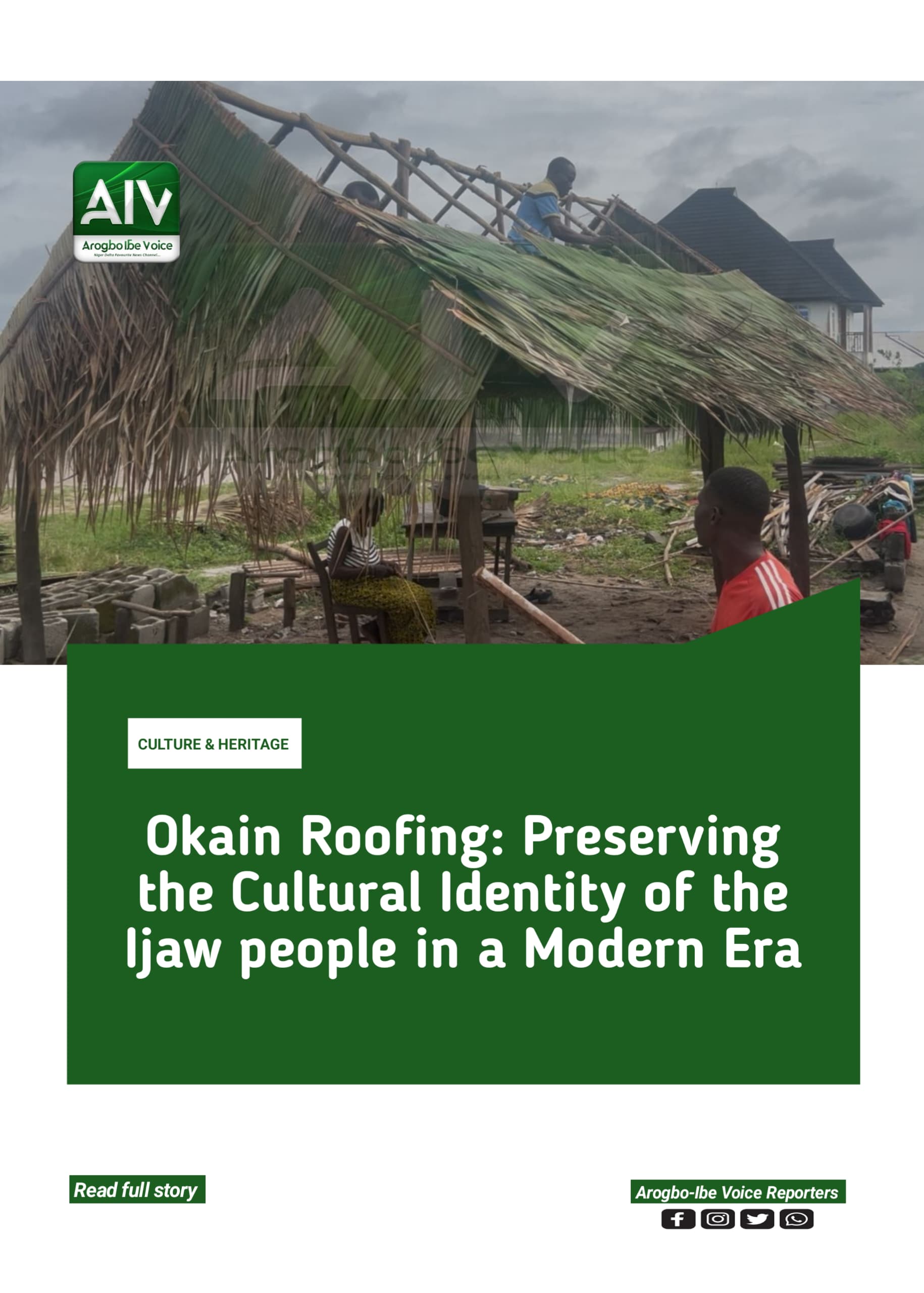
Palm Frond (Okain) Roofing: Preserving the Cultural Identity of the Ijaw People in a Modern Era
Arogbo-Ibe Voice Reporters spotlight an enduring tradition within Arogbo-Ijaw communities

The Ijaw people are widely recognised for their rich cultural heritage, shaped by rivers, forests, and centuries of tradition. Among the most enduring symbols of this identity is okain roofing; an indigenous method of using raffia palm materials to shelter homes, ensure comfort, and express communal values.
FROM TRADITION TO CRAFTSMANSHIP
In earlier times, roofing a house with okain was not merely a construction activity; it was a cultural ceremony. Raffia palms, sourced from the dense mangrove belts of the Niger Delta, were carefully harvested, processed, and woven into thick thatch. This process required skill, patience, and experience; knowledge often passed down through generations.
The craftsmanship involved in okain roofing was highly esteemed. Each layer was meticulously arranged to withstand heavy rainfall while allowing adequate ventilation, making it perfectly suited to the humid coastal environment. Unlike many modern materials, okain roofs naturally regulate temperature, keeping homes cool even during intense heat.
A SYMBOL OF COMMUNITY LIFE
Beyond its functional value, okain roofing played a vital role in strengthening social bonds. Its construction was a collective effort: families, neighbours, and youth groups came together to contribute. These gatherings often evolved into vibrant social events, enriched with storytelling, traditional songs, and shared meals. Such moments served as informal institutions of cultural transmission. Younger generations learned not only the technical skills of roofing but also enduring values of cooperation, respect, and communal identity.
MODERN SHIFTS AND CULTURAL TENSION
With the rise of urbanisation and modernisation, zinc and aluminum roofing sheets have become increasingly widespread. Many now regard them as symbols of progress and durability. However, this transition has gradually diminished the prevalence of okain roofing, particularly in urban centers. Nevertheless, in many riverine communities, okain remains relevant. Its affordability and accessibility make it a practical choice, while its deep cultural significance continues to resonate among those who value tradition.
REDISCOVERING SUSTAINABILITY
Globally, there is a renewed emphasis on eco-friendly and sustainable building practices. What contemporary architects now promote as “green architecture” has long been embedded in Ijaw traditional knowledge systems. Okain roofing; made from renewable materials and requiring minimal industrial processing; stands as a compelling model of environmental sustainability.
In recent times, some builders have begun to integrate traditional okain techniques with modern architectural designs, producing structures that are both culturally meaningful and aesthetically innovative.
MORE THAN SHELTER
Okain roofing is far more than a method of covering homes; it is a reflection of resilience, adaptation, and cultural pride. It tells the story of a people who understood their environment and lived in harmony with it.
In today’s rapidly changing world, preserving such traditions is not about resisting progress, but about maintaining identity. The gradual decline of okain roofing raises a critical question: what becomes of a people when the visible symbols of their culture begin to disappear?
For the Ijaw, the answer lies in balance; embracing modernity while safeguarding the traditions that define them. Though simple in form, okain roofing remains a powerful reminder that culture is dynamic: it evolves, yet must never be forgotten.
Watch Video (Arogbo Coverage):
Arogbo-Ibe Voice Reporters present exclusive footage of a traditional okain-thatched house in Arogbo-Ijaw communities, showcasing its craftsmanship, structure, and cultural significance.
Tap to watch and experience this living tradition firsthand.