
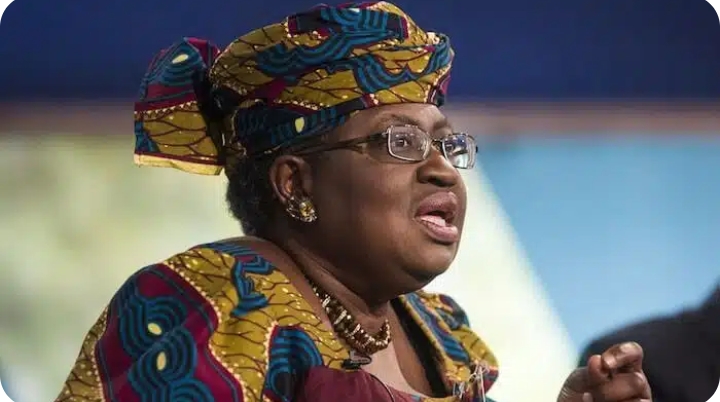

The Director-General of the World Trade Organisation (WTO), Dr Ngozi Okonjo-Iweala, has called on Nigeria to deliberately position itself to attract global investors seeking to relocate or diversify their supply chains, describing it as a critical pathway to job creation, industrial growth, and reduced dependence on imports.
She made the call during a high-level panel discussion held on the sidelines of the World Economic Forum in Davos, where global leaders examined strategies for strengthening Africa’s role in digital trade and infrastructure development.
According to Okonjo-Iweala, rising geopolitical tensions and shifting trade policies across major economies have accelerated supply chain diversification, with many multinational companies adopting what has become known as the “China+1” strategy, moving parts of their production outside China while retaining some operations there.
She noted that while China remains deeply embedded in global value chains, the ongoing reconfiguration of manufacturing hubs presents a rare opportunity for Nigeria to attract investment if it acts with clear intent and direction.
The WTO chief acknowledged ongoing economic reforms in Nigeria but stressed that stabilisation efforts must translate into tangible employment opportunities for citizens.
She emphasised the need for Nigeria to move decisively from economic stabilisation to job creation, noting that sustainable reforms must be measured by their impact on livelihoods and industrial productivity.
Okonjo-Iweala further urged Nigerian authorities to aggressively pursue foreign direct investment by actively engaging investors across major economies, including Asia, Europe, and North America.
According to her, Nigeria must clearly identify sectors with competitive advantages and strategically showcase itself as a viable and attractive investment destination.
While observing that much of the current supply chain diversification remains within Asia, she said Nigeria should aim to secure a significant share of the shifting global production landscape rather than watching opportunities pass by.
She highlighted renewable energy, fashion, and pharmaceuticals as key sectors where Nigeria can expand local manufacturing capacity.
According to her, Nigeria has the potential to manufacture renewable energy components such as solar panels locally, rather than relying heavily on imports, given its natural and human resources.
She also pointed to the fashion and textile industry, stressing the importance of attracting investment to revive domestic production and reduce the influx of imported textiles currently dominating the market.
The pharmaceutical sector was also identified as a strategic opportunity, with Okonjo-Iweala noting that increased local production would strengthen healthcare delivery while reducing foreign dependency.
The panel session also featured key Nigerian economic stakeholders, including senior government officials and development finance leaders, who reiterated the country’s commitment to attracting investment and strengthening industrial capacity.
The discussion underscored growing consensus that Nigeria’s long-term economic growth will depend on its ability to harness global shifts in trade and manufacturing to build jobs, strengthen local industries, and secure a more resilient economy.
