
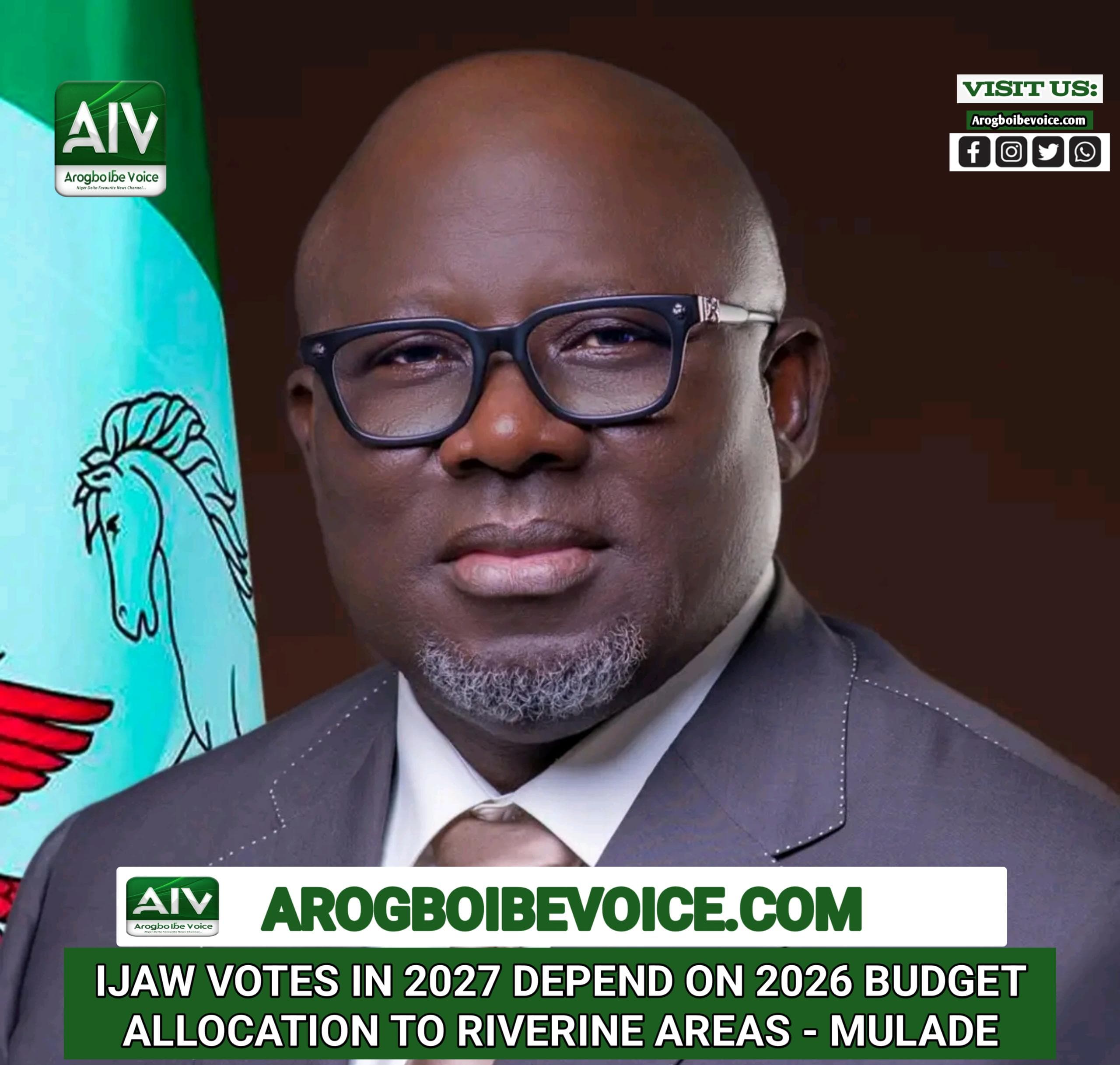

Ijaw Leaders Say Endorsement of Oborevwori for 2027 Hinges on Riverine Development
A leading Ijaw figure and environmental rights advocate, Comrade (Chief) Mulade Sheriff, PhD, has stated that the political direction of Delta Ijaw voters ahead of the 2027 governorship election will be influenced by how well riverine communities are captured in the state’s 2026 budget.
Mulade made the position known in Warri during a press briefing following an expanded meeting of Ijaw stakeholders across Delta State.
According to him, discussions around endorsing Governor Sheriff Oborevwori for a second term are ongoing, but any collective political decision will be based on the level of commitment shown by the state government toward addressing long-standing development gaps in riverine areas.
He explained that adequate funding of projects in riverine communities; largely inhabited by Ijaws and Itsekiris; would be a major benchmark for political support, stressing that these areas have contributed immensely to the state’s economic strength through oil and gas activities.
While acknowledging Governor Oborevwori’s visible progress in upland infrastructure, Mulade expressed dissatisfaction with what he described as persistent neglect of riverine settlements, many of which, he noted, have populations comparable to or larger than some upland local government headquarters.
“These communities host multinational oil and gas operations and contribute substantially to state revenue, yet they lack basic infrastructure,” he said, adding that terrain challenges should no longer be used as justification for underdevelopment.
The Gbaramatu Kingdom chief recalled the strong political backing the Ijaw nation gave the governor during the last election and said the same level of support could be guaranteed in 2027—if backed by concrete development actions.
He emphasized that sustained peace, security cooperation, and reduced restiveness in the creeks have helped stabilize oil production and strengthen Delta’s economy, urging the government to reciprocate through visible legacy projects in the 2026 fiscal plan.
Among the priority projects outlined by Mulade are the Ayakoromo Bridge; the Omadino–Okerenkoko–Kokodiagbene–Escravos Road; Aladja–Ogbe-Ijoh Road; and the Ojobo–Torugbene Road.
He also called for the establishment of a well-equipped general hospital in Ogulagha and other riverine communities.
On education, Mulade noted that while other ethnic nationalities in the state host government-owned universities, the Ijaws and Itsekiris are yet to benefit from such presence. He appealed for the upgrade of the Delta State Maritime Polytechnic, Burutu, into a campus of Delta State University, Abraka, to support maritime and blue economy development.
He also proposed the establishment of a Dennis Osadebe University campus in Koko, with a focus on agricultural innovation, to promote inclusion and balanced development.
Mulade concluded that meaningful inclusion of riverine projects in the 2026 budget would not only strengthen political trust but also position Governor Oborevwori for overwhelming support from the Ijaw nation in the 2027 governorship election.
