
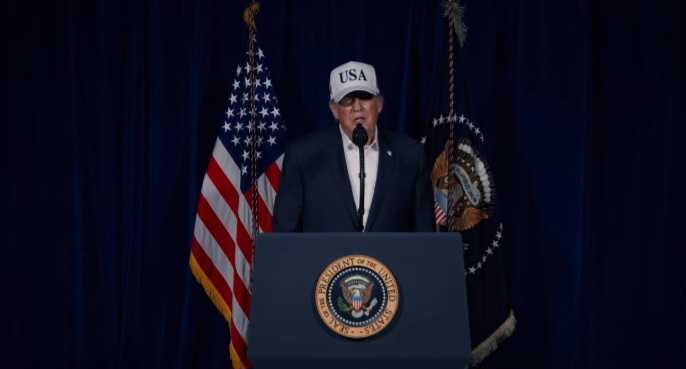

In a bold move, the President of the United state of America, Donald J. Trump announced that Ali Khamenei, Iran’s Supreme Leader for more than three decades, is dead, describing the development as “justice” and urging Iranian security forces to stand down.
In a written statement, Trump said Khamenei was located using advanced U.S. intelligence capabilities and that the operation was conducted in close coordination with Israel.
He asserted that additional senior Iranian leaders were also killed. As of publication, there has been no independent confirmation from Tehran, Washington, or Jerusalem.
If verified, Khamenei’s death would mark the most significant upheaval in Iran’s political system since the 1979 Islamic Revolution.
Succession and Stability in Question
Khamenei, who became Supreme Leader in 1989, held ultimate authority over Iran’s armed forces, judiciary and state broadcasting apparatus, and exercised decisive influence over foreign and security policy.
The office oversees key institutions, including the powerful Islamic Revolutionary Guard Corps (IRGC).
Under Iran’s constitution, the Assembly of Experts is responsible for appointing a successor.
However, a sudden or violent leadership transition could complicate that process, particularly if accompanied by internal security strains or external military pressure.
Trump’s statement claimed that some elements within Iran’s military and security services were seeking “immunity” and reconsidering their allegiance. Those assertions could not be immediately corroborated.
The U.S. president said “heavy and pinpoint bombing” would continue “as long as necessary,” framing the campaign as part of a broader effort to secure peace in the Middle East. The scope, targets and legal framework of the reported strikes were not detailed.
Regional governments have not publicly commented on the reported operation. Analysts warn that confirmation of Khamenei’s death — especially if tied to overt foreign military action — could trigger retaliatory measures from Iranian-aligned groups across the region, including in Iraq, Syria and Lebanon.
Iran remains a central actor in multiple regional conflicts and is a key player in global energy markets. Any abrupt leadership vacuum could ripple through diplomatic channels, security alliances and economic systems.
Inside Iran, public reaction remains unclear. The country has experienced waves of protest in recent years, often met with force. Whether this moment would catalyze reform, consolidation by hardliners, or prolonged instability is uncertain.
Governments worldwide are expected to seek clarification in the coming hours as officials assess the credibility of the claims and the risk of wider escalation.
For now, the situation remains fluid, with confirmation pending and the geopolitical consequences potentially far-reaching.
