
FULL LIST: SENATE APPOINTS OSHIOMHOLE, TAMBUWAL, OTHERS INTO ELECTORAL ACT REVIEW COMMITTEE

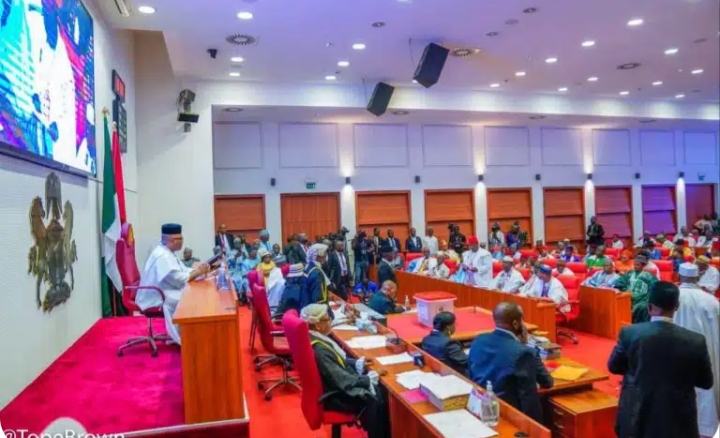
The Senate has constituted a seven-member ad hoc committee to harmonise and distil senators’ inputs on the proposed amendment of the Electoral Act, as lawmakers intensify efforts to strengthen Nigeria’s electoral framework ahead of the 2027 general elections.
The decision followed a three-hour closed-door executive session held on Thursday, during which senators further scrutinised the Electoral Act (Repeal and Enactment) Bill currently before the National Assembly.
Announcing the outcome of the session, Senate President Godswill Akpabio said the committee was mandated to synthesise lawmakers’ views and address outstanding concerns on the bill.
According to Akpabio, the committee will be chaired by Senator Niyi Adegbonmire, Chairman of the Senate Committee on Judiciary, Human Rights and Legal Matters.
Other members of the committee are Senators Adamu Aliero, Aminu Tambuwal, Adams Oshiomhole, Danjuma Goje, Tony Nwoye, and Titus Zam.
Akpabio disclosed that the committee has a maximum of three days to complete its assignment and submit its report to the Senate by Tuesday.
The Senate had earlier stepped down consideration of the Electoral Act amendment bill to allow for deeper examination of the proposed legislation during an executive session, citing its far-reaching implications for Nigeria’s electoral process.
Although the House of Representatives has already passed the bill, the Senate President stressed the need for thorough scrutiny before concurrence, noting that the legislation is critical to ensuring credible elections.
According to the Senate Committee on Electoral Matters, a clause-by-clause review of the bill shows that the proposed amendments would strengthen electoral integrity, enhance transparency, and boost public confidence in the electoral system.
The committee recommended the passage of the Electoral Act (Repeal and Enactment) Bill, 2025, noting that the reforms would expand voter participation, curb electoral malpractice, and strengthen the institutional capacity of the Independent National Electoral Commission (INEC).
Earlier, Senate Leader Opeyemi Bamidele outlined key provisions of the bill, describing it as a major step towards improving electoral credibility and safeguarding institutional independence.
He said the proposed law introduces stiffer sanctions for electoral offences, including vote-buying, with penalties of up to ₦5 million in fines, two years’ imprisonment, and a 10-year ban from contesting elections.
Other provisions include tougher penalties for result falsification and obstruction of election officials, electronic transmission of polling unit results, electronically generated voter identification with a downloadable voter card and unique QR code, recognition of voting rights for prisoners, and early release of election funds at least one year before polling day.
The Senate noted that the reforms are aimed at guaranteeing credible, transparent, and secure elections beginning with the 2027 general elections, subject to approval by at least two-thirds of state Houses of Assembly, in line with constitutional requirements.
