
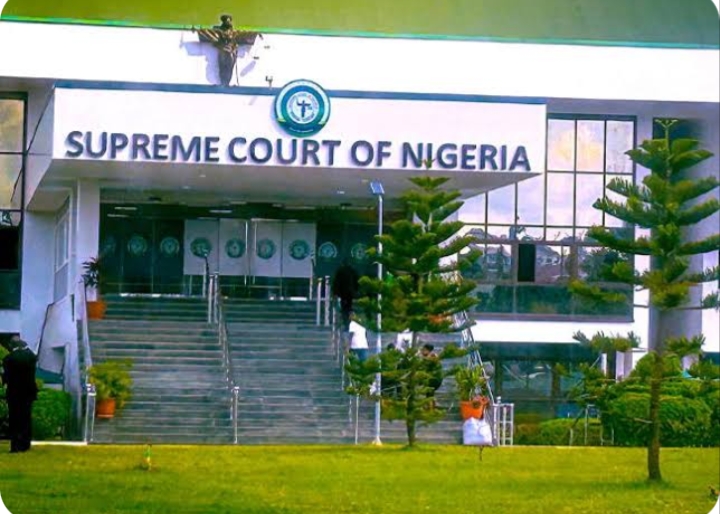
Supreme Court Overturns Appeal Court, Reinstates Wole Olanipekun And Muiz Banire In $2bn Debt Case

The Supreme Court of Nigeria has nullified a previous ruling of the Court of Appeal that barred senior lawyers, Wole Olanipekun and Muiz Banire, from representing their respective clients in an ongoing $2 billion debt dispute.
In a unanimous judgment delivered by Justice Mohammed Baba Idris, the apex court affirmed the right of companies to independently choose their legal representatives, particularly in cases where the legitimacy of a receivership is under challenge.
The dispute involves Neconde Energy Limited and Nestoil Limited, both entangled in litigation over an alleged $2 billion debt owed to a consortium of lenders led by FBNQuest Merchant Bank Limited and FBN Trustees Limited.
At the heart of the case was whether a receiver appointed by lenders could assume exclusive authority to appoint legal counsel for a company; even when the validity of that receiver’s appointment is being contested in court.
The Supreme Court firmly rejected that position.
Justice Idris held that allowing a receiver, whose authority is itself under dispute, to determine a company’s legal representation would create a clear conflict of interest. He emphasised that such powers cannot override the residual authority of a company’s board to defend its interests through counsel of its choice.
The court further clarified that disputes challenging the legality of a receivership fall outside the general powers granted to receivers under the Companies and Allied Matters Act (CAMA).
“The defence of the action through its directors and the counsel retained by them cannot be deemed incompetent merely because a receiver has been appointed,” the court ruled.
The apex court consequently set aside the January 13, 2026 decision of the Court of Appeal, which had recognised the receiver as the sole authority to appoint counsel and disqualified Olanipekun, Banire, and their legal teams.
The ruling is widely regarded as a significant clarification in corporate and insolvency law, reinforcing the autonomy of companies in legal disputes and setting a precedent for future cases involving contested receiverships.
Legal analysts say the judgment will influence how courts handle similar disputes, particularly in balancing creditor rights with corporate governance and fair representation in litigation.
