
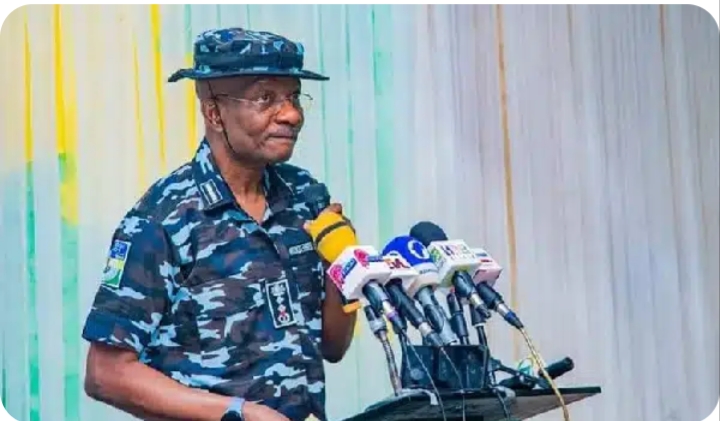

The Inspector-General of Police, Kayode Egbetokun, has declared Nigeria’s banking industry a strategic national asset and ordered an immediate intelligence-led crackdown on cybercriminal networks, insider collaborators and transnational financial crime syndicates threatening the country’s financial system.
Egbetokun made the declaration during a strategic meeting with the Chartered Institute of Bankers of Nigeria (CIBN) and the Body of Bank Chief Executive Officers in Lagos. He said the Nigeria Police Force is shifting from reactive responses to proactive disruption of organised criminal enterprises targeting financial institutions.
“The Nigerian banking industry is not merely a driver of economic activity; it is a core component of our national stability architecture,” he stated, adding that the resilience of the financial system is directly linked to public confidence and investor perception.
As part of a major policy adjustment, the IGP announced that regular police officers would no longer be deployed for routine cash-in-transit escorts or non-essential VIP protective duties within the private sector. He explained that the decision aligns with manpower optimisation and a transition to a more sustainable, professional security model.
Egbetokun warned that traditional risks such as armed robbery have been overtaken by sophisticated cyber-enabled threats, including identity compromise, insider facilitation, organised financial crime and illicit financial flows. He stressed that modern financial crime requires rapid intelligence sharing, evidence preservation and coordinated enforcement.
He also highlighted the importance of meeting global compliance standards such as Anti-Money Laundering and Combating the Financing of Terrorism (AML/CFT) obligations, noting that enforcement capacity now directly affects investor confidence and market stability.
The police chief disclosed intensified collaboration with the Economic and Financial Crimes Commission (EFCC), Nigeria Financial Intelligence Unit (NFIU) and the Central Bank of Nigeria (CBN) to close regulatory gaps and prevent criminal exploitation of the financial system.
He called for structured liaison mechanisms, joint capacity building and lawful information-sharing between law enforcement and financial institutions.
Earlier, Chairman of the Body of Bank Chief Executive Officers, Oliver Alawuba, commended the police for their efforts and urged stronger protection for banking infrastructure amid rising digital threats.
President of the CIBN, Pius Olarenwaju, warned that rapid digital transformation has expanded the attack surface for cybercriminals, stressing that the police must evolve alongside emerging technological risks.
Managing directors and chief executives of several banks attended the meeting, including representatives from Union Bank, Signature Bank, Parallex Bank, Standard Chartered Bank, Keystone Bank, Coronation Merchant Bank, Guaranty Trust Bank and United Bank for Africa.
The development signals a renewed push to safeguard Nigeria’s financial architecture against increasingly complex cyber and financial crimes.
