
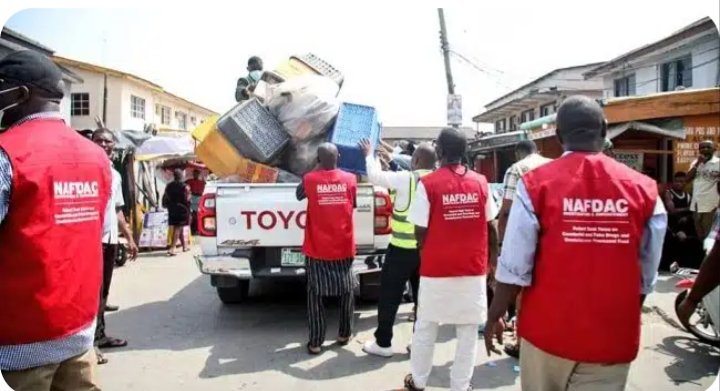
NAFDAC SEIZES OVER 10 MILLION DOSES OF FAKE DRUGS IN LAGOS, SHUTS DOWN FOUR RICE MILLS AND BEVERAGE DEPOT IN NASARAWA

The National Agency for Food and Drug Administration and Control (NAFDAC) has uncovered one of the most extensive counterfeit medicine operations in recent years, seizing over 10 million doses of fake and banned drugs hidden in warehouses across Lagos State.
Naija News reports that the illicit products, valued at over ₦3 billion, were discovered in multiple warehouse structures around the Trade Fair–Navy axis, disguised to look like residential buildings.
Briefing journalists on Monday, NAFDAC’s Director of Investigation and Enforcement and Chairman of the Federal Task Force on Fake and Substandard Products, Martins Iluyomade, said the raid followed intelligence obtained during a training meeting on February 3.
“Acting on information from that meeting, our team visited the location and found multiple warehouse structures built like residential houses but used solely for storage,” Iluyomade stated. “The area is deserted, which is likely why they operated undetected.”
Inside the warehouses, officials discovered large quantities of counterfeit injectable anti-malarials, antibiotics, sachet drugs, blister packs, and banned medicines such as Analgin, prohibited in Nigeria for over 15 years.
Iluyomade described the discovery as alarming, warning that fake life-saving injections, such as those for cerebral malaria, could be fatal if administered to patients.
He added, “It is extremely difficult to distinguish the fake from the original. Even product owners sometimes struggle to tell the difference. That is how sophisticated these criminals have become.”
Eight trailers loaded with assorted fake medicines and cosmetics were evacuated from the site. Iluyomade revealed that the operation involved an international syndicate that clones original products abroad and reintroduces them into Nigeria’s distribution chain.
“The country is under siege by people who want to make money at all costs; even if it means killing fellow citizens and destroying reputable brands,” he said.
NAFDAC warned Nigerians to be cautious of unusually cheap medicines, which could pose serious health risks.
In a separate enforcement action in Nasarawa State, NAFDAC shut down four rice mills and a beverage depot for violations of food and drug regulations, further demonstrating the agency’s commitment to public health and safety.
The agency described the operations as a major breakthrough in curbing the circulation of substandard and counterfeit products in Nigeria.
