
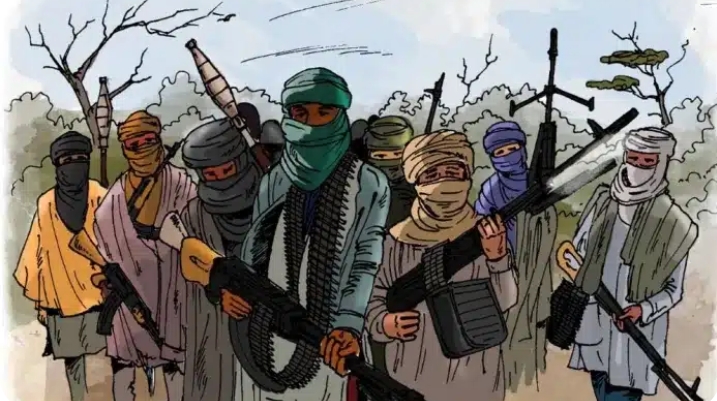

The Katsina State Government has defended its decision to facilitate the release of 70 persons facing trial for alleged involvement in banditry, describing the move as part of efforts to consolidate ongoing peace agreements with armed groups operating across the state.
The plan has generated widespread controversy following the emergence of a leaked letter from the Katsina State Ministry of Justice, which sought judicial intervention to enable the release of the suspects currently undergoing prosecution in various courts.
Reacting to the backlash, the Commissioner for Internal Security and Home Affairs, Nasir Muazu, said the proposed release was aimed at sustaining peace accords reached with what the government refers to as repentant bandits. He stated that the agreements had led to a significant reduction in attacks and the release of abducted persons.
According to Muazu, peace arrangements were reached in no fewer than 15 local government areas, resulting in the release of about 1,000 abductees from captivity. He added that the approach was comparable to prisoner exchanges conducted during and after armed conflicts in different parts of the world.
The commissioner insisted that the action was lawful, stressing that neither the Ministry of Justice nor the courts had violated any legal provisions. He added that individuals dissatisfied with the process were free to seek legal redress.
The controversy followed reports that the Ministry of Justice had written to the Chief Judge of Katsina State, requesting the intervention of the Administration of Criminal Justice Monitoring Committee to facilitate the release of the suspects. The letter, signed by the Director of Public Prosecutions, Abdur-Rahman Umar, indicated that the release was a condition for the continuation of peace accords between frontline local governments and bandit groups.
According to the document, 48 suspects facing banditry-related charges were initially submitted for consideration, while another list containing 22 inmates standing trial before various high courts in the state was later added. Some of the suspects have already been arraigned before the Federal High Court, while others are facing charges at magistrates’ courts.
The government also provided figures showing the number of abductees released under the peace deals from several local government areas, including Sabuwa (310), Bakori (125), Danmusa (60), Dutsinma (62), and Safana (36).
However, the plan has drawn sharp criticism from human rights groups and security analysts, who argue that releasing suspects accused of serious crimes without adequate justice undermines public safety.
The head of the Network for Justice, Abdullahi Hassan Kofar Sauri, called on the government to compensate families of victims affected by bandit attacks. He questioned how victims and witnesses would feel safe if suspects accused of murder, arson, and kidnapping were released under peace agreements.
A security analyst, Yahuza Getso, also described the move as dangerous, warning that it could portray weakness and further embolden criminal groups. He questioned the sincerity of negotiations with bandits, noting that attacks have continued in several parts of the state despite earlier peace deals.
The development comes amid renewed bandit attacks in Katsina State. Recently, gunmen invaded communities in Malumfashi Local Government Area, killing eight people and abducting several others.
As of late 2025, 18 out of the 34 local government areas in Katsina State had entered into peace agreements with bandit groups. While some areas recorded temporary calm, continued attacks in others have raised concerns over the long-term effectiveness and sustainability of the deals.
